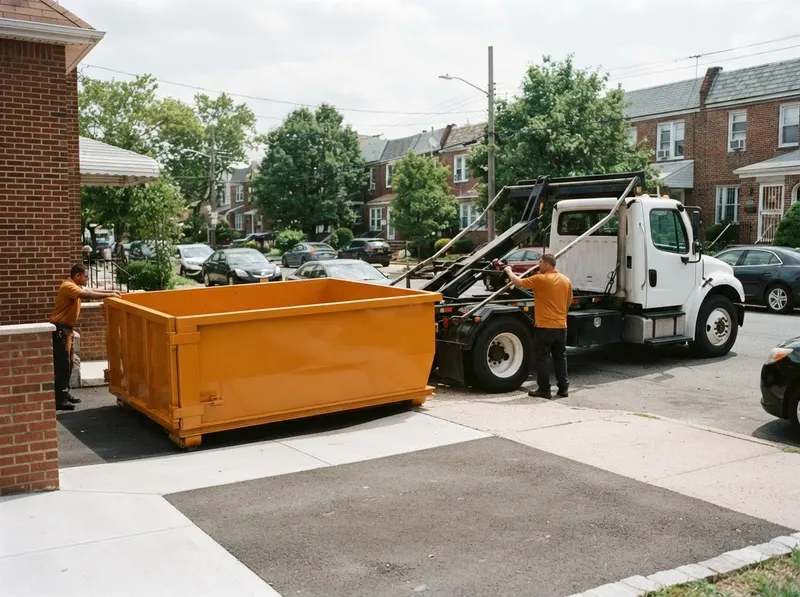
Can I keep my dumpster rental in the street in New York, NY?
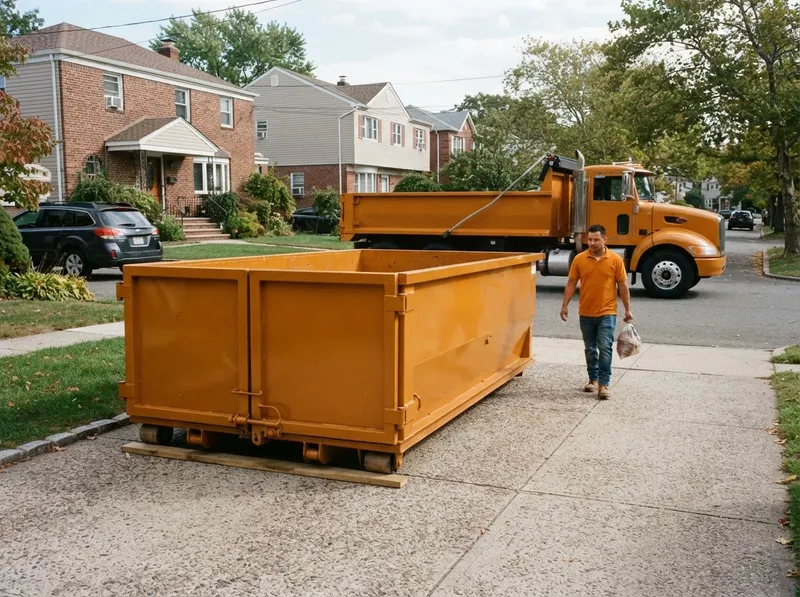
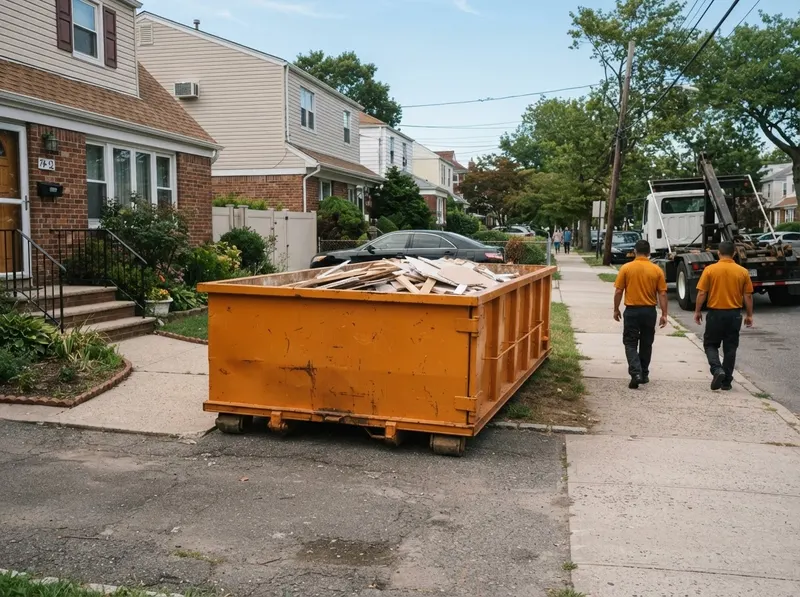
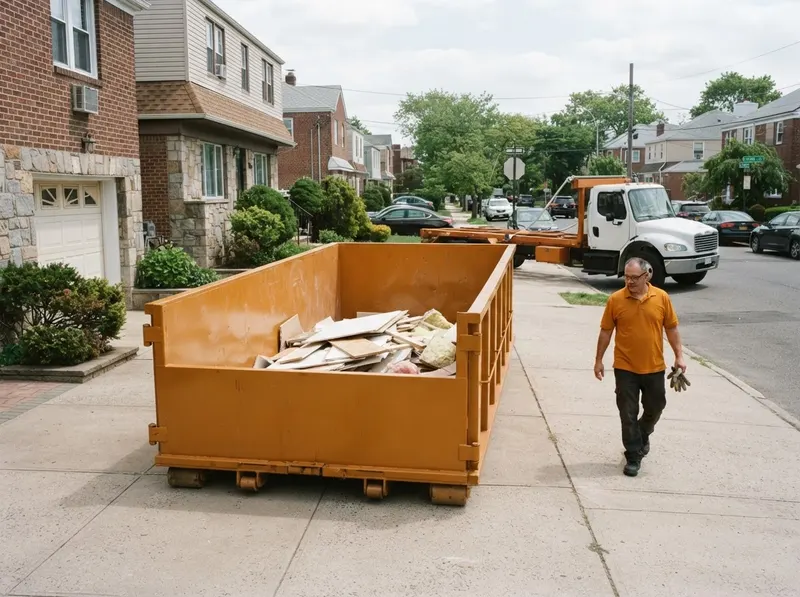
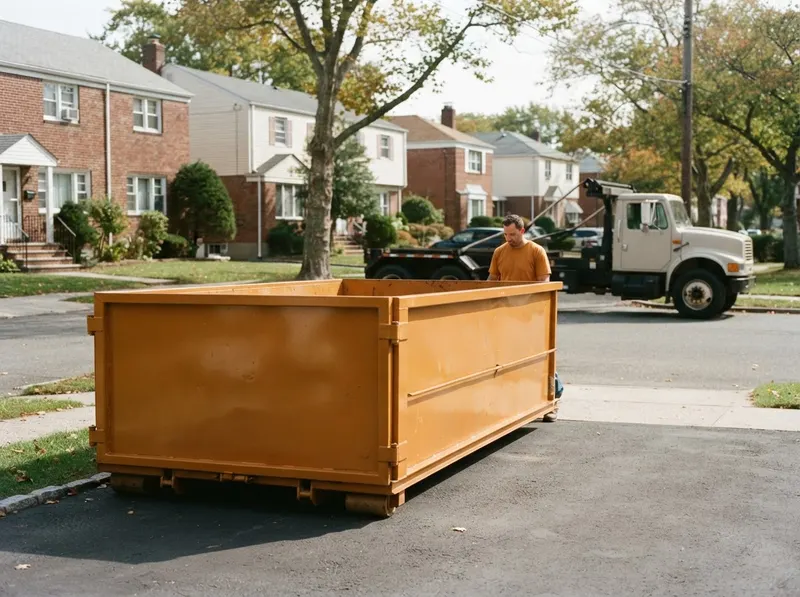
Yes, you can place a roll-off dumpster on a public street or curb in New York provided an official NYC DOT street occupancy permit is secured prior to container delivery. If the container is placed entirely on private property, such as a designated driveway, private parking lot, commercial loading dock, or private construction staging yard, a municipal street permit is not required. When street placement is necessary, our logistics team assists in identifying permit parameters to ensure placement fully complies with local municipal street parking codes.
How much advance notice is needed for dumpster delivery in New York?
Standard dumpster delivery across New York typically requires 24 to 48 hours advance notice to schedule truck routes and verify site access. However, during the peak spring and summer construction surge extending from April through August, reserving your container three to five business days ahead is strongly recommended to guarantee container size availability and optimal morning delivery windows. For unexpected job site emergencies, same-day or expedited next-day dispatch can often be coordinated depending on regional truck routes.
What materials are prohibited from New York roll-off dumpsters?
Prohibited items in New York roll-off containers include hazardous chemicals, wet paint, industrial solvents, sealed pressurized gas tanks, motor oil, car batteries, automotive tires, raw
asbestos, appliances containing liquid
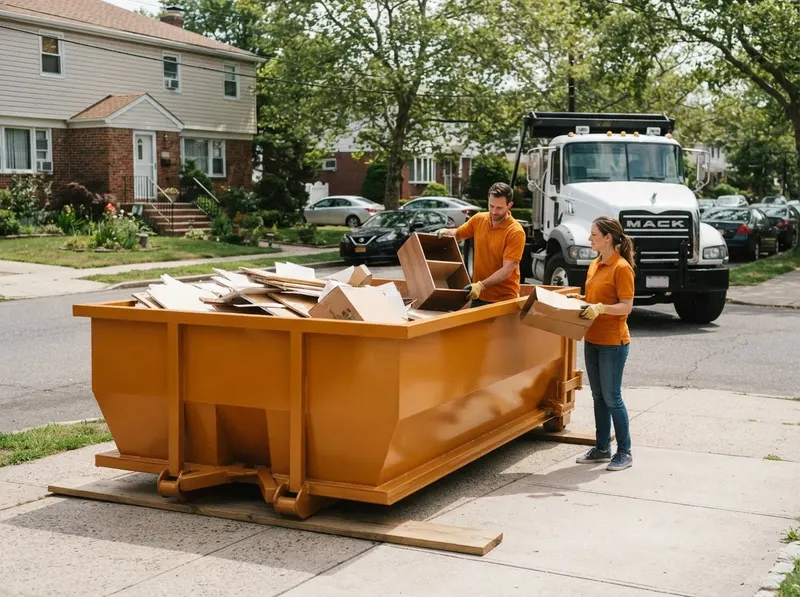
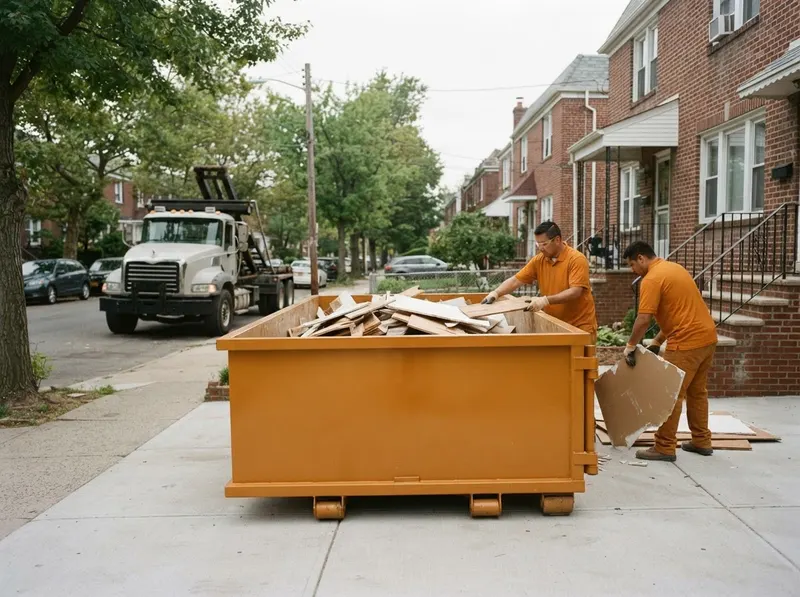
refrigerants (such as freon), and regulated medical or biological waste. These items are strictly regulated by New York State and federal environmental disposal laws and must be processed through specialized disposal channels. Non-hazardous construction materials, dimensional lumber, drywall, tile, roofing shingles, metal framing, and common household items are completely acceptable.
How do weight overages work on New York dumpster rentals?
Each roll-off container size comes with an upfront, explicitly defined weight allowance (such as 2 tons for a 10-yard bin or 4 tons for a 30-yard bin). When the container is hauled away, it is weighed on state-certified scales at the regional waste transfer station to determine total gross payload. If your load exceeds the included weight threshold, the excess tonnage is billed at a standardized, transparent per-ton prorated overage rate with zero hidden administrative penalties, ensuring complete clarity on your final disposal invoice.
How much clearance space is required for delivery trucks in New York neighborhoods?
Roll-off delivery trucks operating in New York require approximately 60 feet of straight-line horizontal approach clearance and a minimum of 14 feet of overhead vertical clearance. This overhead space ensures the hydraulic hoist and tilt bed can elevate and roll the container off the truck frame without striking low-hanging overhead utility wires, tree branches, building awnings, or outdoor fire escapes. In tight neighborhoods like the Upper West Side, Greenwich Village, or Astoria, clearing parked vehicles in front of the drop zone prior to truck arrival is critical for successful staging.
What is the best way to prevent damage to private driveways in New York?
To protect residential driveways, decorative pavers, and asphalt surfaces from direct metal-on-surface contact, heavy wooden boards or protective composite staging pads should be placed on the ground directly beneath the roll-off container's steel wheels and ground support points. This distributes the structural weight of the loaded bin and prevents surface scuffs, asphalt indentations, or cracked concrete pavers. Property owners can request protective plank placement during initial scheduling to ensure driveway surfaces remain fully safeguarded.
What happens if parked cars block the dumpster delivery spot in New York?
If parked passenger vehicles, moving vans, or commercial delivery trucks obstruct access to the designated drop location upon the truck's arrival, the driver cannot safely set the container without risking property damage or blocking active traffic lanes. To prevent delivery delays or trip fees, customers should reserve curbside space by positioning personal vehicles or safety cones in the delivery stall, moving them immediately when the roll-off truck arrives to ensure a direct, clear back-in line.
How long is the standard roll-off dumpster rental period in New York?
The standard dumpster rental period in New York typically spans 7 to 10 calendar days, which provides ample time for residential cleanouts, commercial tenant improvements, and structural demolition phases. If your project finishes ahead of schedule, you can call for an expedited early pickup at no additional penalty. If your project encounters delays and requires extra time, rental extensions can be added for a nominal flat daily fee to keep the container on-site as long as necessary.
Can I mix heavy concrete and general construction debris in the same dumpster?
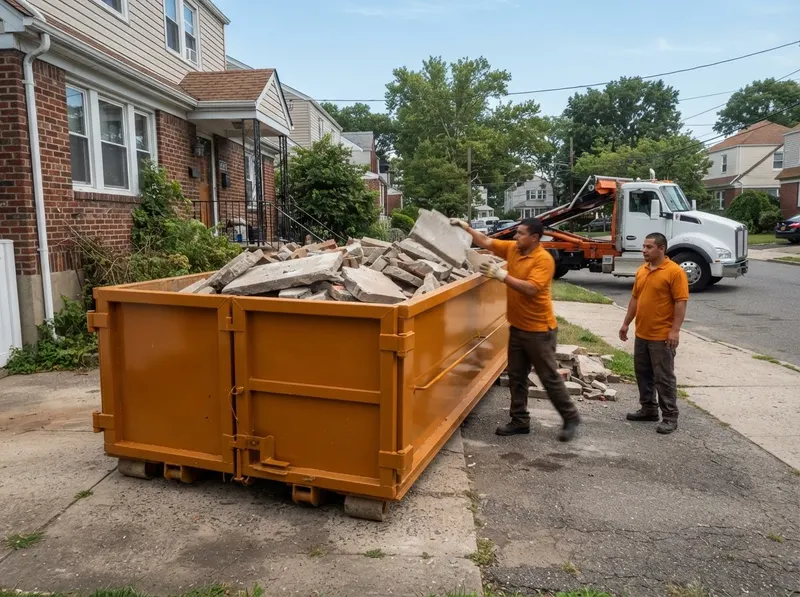
While small amounts of broken brick or concrete can be mixed with general construction and demolition (C&D) debris, large-scale masonry, stone, dirt, or foundation demolition loads must be placed into a dedicated heavy inert fill container. Mixing high volumes of dense masonry into a standard large container will quickly exceed legal road weight limits and result in severe transfer station overweight charges. Dedicated masonry dumpsters are billed at specialized flat-rate heavy material pricing to keep hauling safe, legal, and cost-effective.
How high can I fill the roll-off dumpster before pickup in New York?
All roll-off dumpsters must be loaded level with the top rim of the container walls, with no debris protruding above the side rails or hanging over the exterior edges. Federal and New York State transport safety regulations require the roll-off truck driver to secure a heavy safety tarp completely over the container bed before traveling on public roads, bridges, and expressways. Overfilled containers that cannot be safely tarped must be leveled off before the driver can legally haul the container away.
Do you deliver dumpsters on weekends in New York boroughs?
Weekend dumpster deliveries and pickups are available across all five boroughs by advance reservation. Scheduling weekend drop-offs is especially popular for residential cleanouts, retail fit-outs, and commercial remodeling projects in busy commercial zones where weekday traffic, loading dock congestion, or alternate side parking rules make weekday truck staging challenging. Booking weekend slots two to four days ahead guarantees driver availability and precise routing windows.
How does dumpster delivery work for high-rise buildings and commercial facilities in New York?
Commercial high-rise deliveries are coordinated directly through building management offices, property engineers, or loading dock supervisors. Roll-off containers can be placed directly inside dedicated internal loading bays, alley service drives, or adjacent curbside freight staging areas during permitted delivery hours. Our team coordinates arrival times to match freight elevator reservations, security check-in protocols, and building insurance requirements to ensure completely compliant commercial site execution.